Children's allergies

Allergies - top illnessXXIcentury. Today it affects more than 80% of the world's population. This disease can be caused by many factors, ranging from external irritants to exacerbations within the body. It is worth paying attention to the fact that allergies cannot be cured completely. The main principle of combating it: identifying the allergen and its complete isolation.
Manifestation of allergies in children
Most diseases appear in childhood and accompany us throughout our lives. And allergies are no exception. At an early age, a child is most vulnerable; the immune system is still weak. Most often it manifests itself in response to external stimuli. So the baby can easily not tolerate dust, animal hair, any type of food, or even several, flowering herbs, and so on.
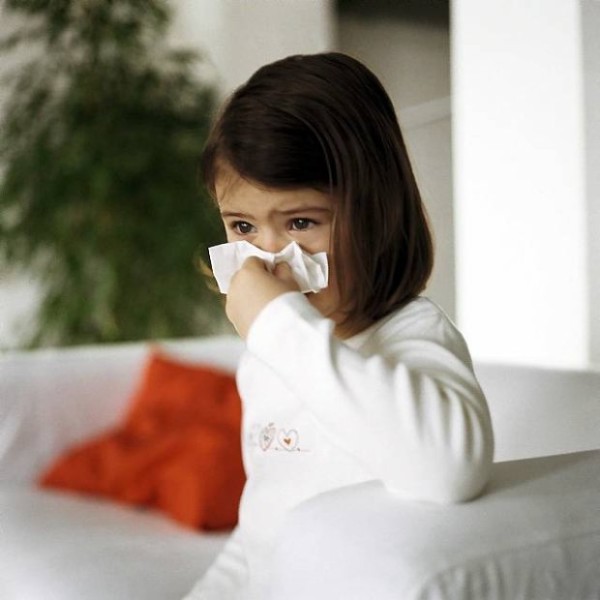
This disease can manifest itself in several forms: immediate and delayed reaction. The first type is an immediate reaction of the body to a stimulus. This takes from 5 minutes to 2 hours. The consequences are more severe than with a delayed reaction (Quincke's edema, anaphylactic shock). The second type develops over a long period of time, up to two days. Expressed as dermatitis, drug allergies.
In children under three years of age, the skin is most susceptible to allergic reactions. Afterwards, other organs enter into the allergic process. The older the child gets, the more organs will be involved.
To identify allergies, it is necessary to conduct an examination. Donate blood for an allergen. Make a test, that is, a small dose of the allergen will be injected into the child’s body, after which (if the result is positive) a lightning-fast reaction will follow. After all the procedures performed, the doctor will select the necessary treatment.
Allergy symptoms in children
How to identify allergies? How to understand that it is not prickly heat or urticaria, not a cold or viral? It's not that complicated. There are certain symptoms that appear in all children equally:
-
The first and main symptom is inflammation of the skin. It can be either simple redness or rashes, eczema, peeling;
-
second - the appearance of stomach problems, possible pain, problems with stool;
-
Nasal discharge may also appear - the child will constantly sniffle, but there will be no runny nose:
-
sneezing - since allergies cause the nasal mucosa to be irritated, frequent and prolonged sneezing is possible;
-
temperature may appear.
If your child has an allergy, then most likely several symptoms will be present at once. However, as statistics show, signs of the disease develop one after another as allergies progress. Therefore, you should act immediately as soon as you see one of the above signs.
Allergies in an infant
Infants are most often exposed to allergies when the mother stops breastfeeding the baby in the early months and switches him to formula. In this case, the baby’s body has not yet had time to get stronger, the mechanism of assimilation of adult food has not really improved, and they have already begun to give him complementary foods. Under such circumstances, it is almost impossible to identify allergies at an early stage. Until the disease manifests itself in a certain reaction.

In more rare cases, a child acquires an illness if the mother did not adhere to a diet during pregnancy. Almost all doctors recommend that pregnant women not eat foods related to classic allergens (citrus fruits, eggs, chocolate, and so on). However, not all expectant mothers listen to their advice, which later affects the baby.In infancy, allergies can go away as suddenly as they appeared. After the child’s body has strengthened to the required extent, the immune system will produce a sufficient amount of enzymes, which will contribute to recovery.
In some cases, the child may sneeze or cough heavily, and clear discharge may flow from the nose. These symptoms indicate allergic rhinitis. You should consult a doctor, he will prescribe the correct treatment and examination.
Causes of allergies in children
So what causes allergies? What exactly contributes to this process?
-
The main reason is improper bowel function. That is, the permeability of the intestinal walls increases. This can happen due to poor nutrition, excessive consumption of medications, or overeating. In this case, large allergen molecules penetrate into the blood. The body easily responds to any external influence with various reactions.
-
Frequent viral respiratory diseases, colds, are also causative agents of allergies. Sometimes a child is simply unable to cope with the illness that has befallen him. The load on the body increases not only physically, but also psychologically. And this increases the likelihood of an allergic reaction several times.
-
An equally rare cause is heredity. Possibly,one of the parents is allergic, or a grandparent; such an illness can easily be passed on through a generation. Naturally, the risk increases if both parents suffer from the disease.
-
Allergies can be caused by chemicals, household dust, insect bites, pollen, etc.

Food allergies in children
The most common and unpleasant type of allergy in children is food —ohOften, children's immune systems are highly susceptible to individual food components, which are contained to some extent in all foods. In such cases, immunoglobulin E (an immune system protein) interacts with the allergen, causing a chemical reaction in the body. This leads to the appearance of symptoms: internal and external. It is quite easy to identify it at home. However, treatment and prevention are best carried out after consultation with a doctor..Food allergy refers to one of the types of food intolerance and is the cause of all further development of allergic diseases in children.

Children with food allergies should follow a strict diet.
img-zdorovyi-rebionok-vitamin-d-vitamin-solnca
Allergy to the sun in a child

An allergy to the sun, or photodermatosis, cannot be ignored. A child can stay in the sun for a few minutes, but his skin will still be covered with a small red rash that will cause itching and burning sensations. If your baby has delicate skin, then in this case, the appearance of blisters (sunburn) is typical. This reaction is explained by the fact that a large amount of allergen (for example, pollen) is present on the child’s skin. After exposure to the sun, a reaction occurs that leads to dermatosis.
Such allergies can be caused by internal disorders of the body. Those children who have diseases of the thyroid gland, kidneys or liver, most susceptible to the disease. This is because their bodies accumulate harmful compounds, which increases their susceptibility to ultraviolet (UV) rays.
You can avoid allergies and their consequences. If you notice that your child is sensitive to UV rays, follow these guidelines:
-
do not walk with your child during lunch hours - it is better to do this in the morning from 6 to 9, in the evening from 17 o'clock.
-
if you want to sunbathe, do it in a place that has a cover over it.
-
do not use sunscreen, even baby creams contain various additives - you should turn to natural oils (chamomile) that will protect your child’s skin, but will not irritate it.
Skin allergies in a child
Skin allergies, so-called dermatitis, can occur in a child for absolutely any reason. That is, your baby’s immunity is weakened, literally any irritant, internal or external, can lead to redness, eczema, peeling, and diaper rash. If at least one of the above symptoms appears, you should immediately consult a doctor.

Dermatitis most often occurs due to food allergens. In this case, you should keep a “food diary”. It notes everything that the child eats. It would be more correct to gradually introduce the product one at a time and watch the reaction. The food that gave positive results should be completely excluded from the diet.
How to treat allergies in a child
It is impossible to completely cure allergies. It is only permissible to identify the allergen and try to limit contact with it. It is better to treat allergies as prescribed by a doctor. The most commonly prescribed medications that protect against allergies are antiallergic drugs. If the disease is at a severe stage, hormonal drugs are prescribed.
There are five types of drug treatment:
-
Antihistamines. They relieve irritation and itching. Such drugs are taken for several days.
-
Enterosorbents. Taken to remove toxic substances from the body.
-
Antibacterial agents (antibiotics). Used when secondary infections occur on damaged skin.
-
Ointments. Special external agents with antimicrobial properties that relieve swelling, irritation and itching.
-
Hormonal medications. Used only in cases of long-term illness. Prescribed in small doses.

In addition to treatment with medications, you can use traditional medicine:
-
Rinsing or bathing with herbs, namely string or chamomile. The sequence reduces itching and cleanses the skin. Chamomile relieves irritation, dries and heals inflammation.
-
To relieve your child from itching, you can wipe him with an infusion of bay leaves.
-
Shilajit helps strengthen the immune system and eliminates signs of allergies. Children under 8 years of age are recommended to take 40 ml of solution at a time. It is best to take this medicine with goat's milk.
-
Baths with sage will help your child get rid of eczema and will also help with rhinitis.
Allergy prevention

If your child is allergic or has a predisposition to allergies, the following rules should be followed:
-
exclude allergenic products from the diet;
-
remove carpets from the house;
-
carry out wet cleaning daily;
-
limit communication with animals;
-
try to purchase clothes made from hypoallergenic materials.