Epilation of legs: methods, results, skin care

Every self-respecting girl takes care of herself. He plays sports, leads a healthy lifestyle, and takes care of his body. Today's article is devoted to the topic of hair removal. After all, smooth skin is not the last reason for a woman’s self-confidence. This article will tell you about the best ways to epilate your legs, what results you will get after the procedure, and how to care for your skin after epilation.
Contents
Methods for epilating legs 

The skin of the legs is not the most delicate part of the female body, so there are many ways to epilate it. Such as:
- shaving;
- waxing;
- sugaring;
- salon procedures for removing unwanted hair;
- mechanical pulling.
Banal shaving is a proven, reliable, but outdated method. Shaved hairs grow back quickly, becoming darker and coarser. Shaving has been replaced by waxing and sugar paste. These methods have long and firmly settled in the hearts of modern girls. Of course, the methods are simple, inexpensive and effective. But more about them a little later. It is also possible to epilate at home honey.
Laser hair removal of legs
![[ File # csp7678202, License # 1298111 ] Licensed through http://www.canstockphoto.com in accordance with the End User License Agreement (http://www.canstockphoto.com/legal.php) (c) Can Stock Photo Inc. /mast3r](https://bagiraclub.ru/en/images/bagiraclub/2016/04/s.jpg)
Salon methods of dealing with excess hair are becoming increasingly popular. The only disadvantage of salons is that not everyone can afford their services. But among the advantages there are such as:
- qualitatively;
- fast;
- painless.
After salon treatments, the skin can remain smooth for up to several years.
Such methods include laser hair removal. Under the influence of laser radiation, the hair follicle is destroyed and the hair falls out. And since the hair follicle itself is affected, hair growth slows down over time and may stop altogether. Laser hair removal is suitable for any area of the skin and helps combat ingrown hairs.
Please note that the procedure is carried out using different lasers. There are 4 types of lasers:
- neodymium;
- alexandrite;
- dioid;
- ruby.
According to user reviews, the diode laser is the undisputed leader. It allows you to remove hair even on tanned skin. Suitable for any skin type, including men. Pleasant bonuses from using a dioid laser are skin rejuvenation, removal of age spots and spider veins. It also allows you to cover a fairly wide area of skin in one session.
The Alexandrite laser is inferior to the diodyne laser only in that it acts on hair that is in the stage of active growth.
Proper leg hair removal at home 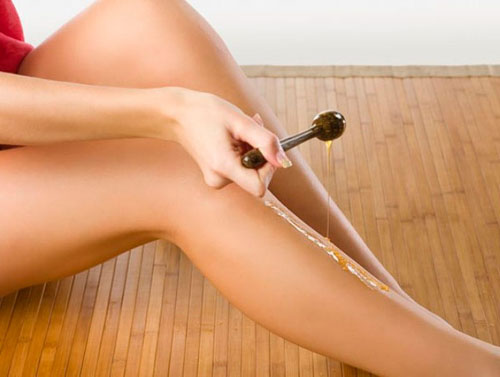

The best means for fighting hair at home are considered to be waxing and sugaring. They are based on a general principle - pulling out hairs using an adhesive substance, which is wax and or sugar paste. Sugar paste is considered to be a gentler method for hair removal. But the choice depends on individual preferences.
The home waxing procedure has a number of contraindications. Namely:
- the presence of open wounds and inflammations on the skin;
- allergy to components of the depilatory composition;
- pregnancy;
- diabetes;
- varicose veins;
- warts, large moles, papillomas.
Sugaring has the title of a hypoallergenic procedure, perfect for sensitive skin.
Please note that in order to remove wax residues from the skin, you need to apply cosmetic oil to this area and remove particles with a cotton pad.
Waxing legs 

It is recommended to undergo preparation before hair removal procedures.
- Take a shower using a soft washcloth or sponge. Do not irritate your skin with harsh abrasives.
- Make sure all instruments and hands are sterile.
- Treat the epilation area with a disinfectant. Miramistin and Chlorhexidine are suitable for this purpose. Alcohol-free.
- Carry out the hair removal procedure. To do this, apply well-heated wax or sugar paste to the desired area with a special spatula. Place epilation paper on top. With a sharp movement, remove the paper from the skin.
- After hair removal, it is recommended to re-treat the skin with an antiseptic.
- Use cosmetic oil to remove traces of wax from the skin.
It is more convenient to use wax in special cartridges - they are equipped with a special applicator that makes application easier. But to heat wax in this format, you will need a special electric “base”.
Epilation of legs with an epilator
Every second modern girl has an epilator in her arsenal. This device is not cunning, compact and not expensive. However, despite its simplicity, not everyone knows how to use it correctly. So, 6 rules for proper hair removal using an epilator.
- Before the procedure, steam your skin well or at least take a hot shower. This will make it easier to pull out the hair.
- Epilation should be carried out when the hairs have grown sufficiently. Approximately 0.5 cm. This will allow the device to better capture the hair.
- Use reduced speed. This is of course longer, but this way the tweezers will be able to grab every hair.
- When epilating, you need to move strictly against hair growth. This will make it easier for the device to grab the hairs and you won’t have to torture the same place twice.
- Do not put pressure on the machine. All movements should be smooth and easy. Otherwise, irritation and damage to the top layer of skin cannot be avoided.
- You should not use all kinds of creams that reduce pain in conjunction with the epilator. The machine may slide and not catch hairs.
Please note that the skin tends to “get used” to pain. That is, after 3-5 minutes the unpleasant sensations from the epilator will become less sensitive. Also, if you do not take long breaks between epilations, after a couple of months the discomfort will disappear.
Legs after hair removal 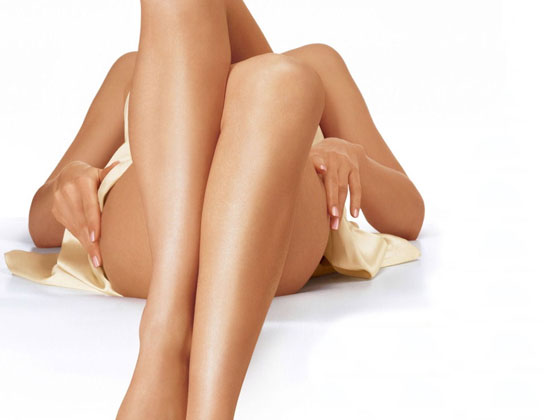

Despite the fact that the skin of the legs is not as delicate and sensitive as, say, the bikini area, it also needs to be taken care of. So, how to care for your skin after hair removal.
Studying women's forums about caring for legs after epilation, we can draw the following conclusions:
- After the procedure, you should not subject irritated skin to mechanical stress. Just treat it with an antiseptic.
- Be sure to moisturize your skin well after epilation. This will help avoid flaking and dryness. But don't clog your pores. Therefore, it is better to leave the oils on the shelf for now.
- It is not recommended to wet your legs for 48 hours after epilation. If possible, refrain from bathing procedures or reduce the time spent in the water to the maximum.
- 2-3 days after the procedure, use a scrub. The hairs become weaker and have less and less strength to break through the epidermis. And ingrown hairs may occur. It is not aesthetically pleasing and uncomfortable.
How to remove redness, spots, irritation on the legs after hair removal 

Literally few people manage to avoid irritation and redness of the skin after hair removal. What should everyone else do?
- The main rule after hair removal is to thoroughly disinfect the skin. After the procedure, micro-wounds and cuts remain on the skin. Bacteria trapped in them can lead to serious complications, causing redness and pimples. For this, products such as chlorgesidine, hydrogen peroxide, boric acid are well suited.
- To relieve redness, use regular baby powder. It will soothe the skin and remove excess moisture without drying it out.
- Traditional medicines cope well with redness. Treat yourself to a foot bath using infusions of chamomile, calendula, and string.
- Cosmetics manufacturers offer a wide selection of all kinds of aftershave creams, oils and essences. They are designed to reduce burning and itching of the skin. They also have strong antiseptic properties. For example, Solcoseryl, Actovegin, tea tree oil.
- To combat pimples, laundry soap and salicylic ointment are suitable.
If hair grows on your legs after hair removal - what to do? 

If your skin is prone to ingrown hairs, then give preference to waxing or sugaring to prevent their appearance. And to combat existing ingrown hairs, try to prevent the factors that contribute to their occurrence, which are described below. Do not try to remove ingrown hairs yourself; it is better to contact a professional. Otherwise, you may get an infection, which will cause irritation and even the appearance of ulcers, which is very painful and unpleasant.
Causes of ingrown hairs:
- hormonal imbalance, increased amount of estrogen weakens hairs;
- damage to the hair canal;
- hair breaking off below skin level;
- shaving with a dull blade against hair growth;
- wearing tight synthetic underwear, as a result of which the skin does not breathe.