Gonorrhea in women: symptoms, causes, treatment

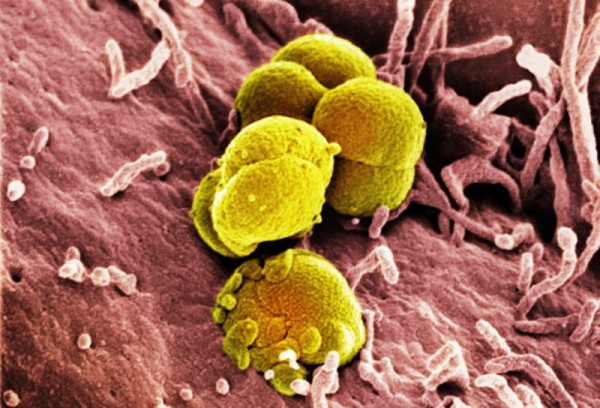
Gonorrhea (gonorrhea) is a sexually transmitted disease that affects both men and women, the causative agent of it is gonococcus - gram-negative diplococcus. Congenital immunity to gonococcus does not exist and it is impossible to acquire it, any person can become infected with a dangerous infection many times, therefore it is so important to detect the disease in time and start treatment in a timely manner.
Content
Causes of gonorrhea
Gonococcus is the simplest parasite that enters the human body during intercourse, most of them are contained in the vaginal secretions of a sick woman. The incubation period usually lasts from 18 days, symptoms are detected at about 5 days.
Since the disease is highly contagious, any type of intercourse, be it oral, anal or vaginal sex, there is a 99% chance that the infection will infect a partner. Moreover, women become infected much more often than men, this is due to the anatomical features of the genitourinary system. Sometimes there are cases of infection from a mother to a newborn child during childbirth or through household items - a towel, a washcloth, but this probability is negligible, since the bacterium dies quickly when it dries.
Usually, the defeat of gonorrhea covers the mucous membranes of the genitourinary tract, intestines and even the nasopharynx, it all depends on what type of intercourse the partners preferred. In some cases, the infection can spread to the musculoskeletal system. Babies to whom gonorrhea is transmitted in the womb are born blind in 50% of cases. 
Gonorrhea in women: symptoms
In most women infected with gonococcus, the disease is asymptomatic, which is especially dangerous. The manifestation of the disease directly depends on which organs were affected.
It is possible to identify gonorrhea that has affected the urethra and thereby caused urethritis by the following signs:
- pain during urination and intercourse due to thinning of the vaginal mucosa;
- cramps, itching and burning in the genital area;
- yellow, greenish discharge mixed with blood and pus;
- increasing frequency of urination;
- a constant feeling of fullness in the bladder.
The second area in terms of the frequency of gonococcal lesions is the cervix. Cervicitis disease is almost painless, but often itching, burning and tickling sensation in the vagina occurs, as well as profuse leucorrhoea. On examination, the doctor may suspect the development of an ailment by the bright red color of the cervix.
In advanced cases, the infection rises higher, affecting the appendages and the uterus. In this case, the patient may suffer from acute pain. The high temperature rises sharply, there is nausea, dizziness, intoxication of the whole organism occurs. The discharge is purulent in nature with an admixture of blood.
Gonorrhea of the rectum is called gonorrhea proctitis, he often has no symptoms, but sometimes patients complain of itching and burning in the anus, yellowish discharge mixed with blood, mild pain and false urge to defecate.
Gonococcal pharyngitis is a disease that can progress rapidly and affect the entire oral cavity. Its symptoms are similar to those of sore throat - irritated throat, perspiration, swelling of the mucous membranes, inflammation of the lymph nodes, but with gonococcal pharyngitis, tonsils with a grayish coating are found. 
Diagnostics of the gonorrhea
Diagnosis of gonorrhea consists of several stages:
- History of the disease from the patient's words (estimated time of infection, number of unprotected connections).
- The clinical picture of the disease.
- Bacterioscopic and bacteriological examination (detection of infection in the secretions of the urethra, vagina, rectum, tonsils).
- Since gonococci have the ability to adapt to adverse conditions, the bacterioscopic examination method is not always accurate. With hidden, asymptomatic forms of gonorrhea, bacteriological examination is most often carried out, it is also more suitable for pregnant women and children.
Diagnosis of gonorrhea largely depends on the correct sampling of material for analysis and the qualifications of the doctor. 
Stages and types of gonorrhea
For subsequent treatment to be successful, the doctor must determine the stage of the disease:
- The fresh stage of the disease should not exceed two months. At this stage, an acute stage is distinguished (characterized by severe pain and other symptoms, it is more common in young, strong men, whose immunity is actively fighting the disease, is easily treatable), subacute (with an increase in body temperature, pains and some other symptoms), torpid (almost asymptomatic, in the absence of treatment becomes chronic).
- If you let the disease take its course and do not start treatment when the first signs appear, after two months the disease flows into a chronic form. The infection begins to spread to other organs and give complications - prostatitis, inflammation of the uterus and, as a result, infertility.
- A latent form is also distinguished, in which the patient does not know about his infection, but is a source of infection.
- With the latent form of gonorrhea, there are no symptoms, but upon examination, the causative agent of the disease is found. It usually occurs in women and becomes chronic over time.

Medicines for gonorrhea
Treatment regimens for gonorrhea most often include treatment with pills (Cefixim, Ciproflexacin, Ofloxacin) and intramuscular injections (Ceftriaxone, Spectonomycin), it all depends on the form, stage and complications of the disease.
If the infection occurred no more than two months ago and is in an acute stage, it is possible to eliminate the problem with the help of pills alone, but it will be faster and more efficient to cope with it with injections. Other stages of gonorrhea can only be treated with antibiotics in the form of injections. In this case, the doctor also prescribes local antiseptic agents and drugs that increase the patient's immunity.
It is worth remembering that any effective means from gonorrhea, it will first eliminate the symptoms, but this cannot be stopped, the course of treatment should be continued until complete recovery, after which it is necessary to retest for the presence of infection. 

Treatment of gonorrhea in women
As soon as the examination showed the presence of a gonococcal infection, it is worth immediately starting a course of treatment according to the doctor's schemes. It is selected individually and depends on several factors - on what stage the disease is at the moment, what is the area of the lesion, whether there are complications and other attachment infections.
The acute form of gonorrhea in women is treated with antibiotic therapy (antibiotics), usually drugs of the penicillin group (Oxacillin, Amoxicillin), and gonococcus is also sensitive to antibiotics of the tetracycline and cephalosporin series.
If resistance to penicillin is found, a sensitivity test is performed and treatment with new generation antibiotics (Streptomycin, Levomycin) is prescribed.
In addition, local therapy - douching (Miramistin, manganese solution) and warm baths give a good result.
To increase the body's resistance to infections, immunostimulants and physiotherapy (electropheresis, laser therapy) are prescribed. 


Gonorrhea during pregnancy
Gonorrhea is also dangerous because it often proceeds without any signs, especially pregnant woman often disturbed by discomfort in the lower abdomen and perineum, discharge and slight discomfort, therefore, to accurately determine the diagnosis, it is necessary to conduct laboratory tests.
Possible consequences of infection of a pregnant woman:
- there is a possibility that the child will be born prematurely;
- the threat of miscarriage is great;
- infection of the amniotic fluid and amniotic fluid;
- postpartum complications;
- decreased immunity, and as a result, there is a high probability of infection with HIV and other diseases of the genitourinary system.
In the womb or during childbirth, a child can become infected from an infected mother, quite often this leads to vision problems and even blindness. In severe cases, the consequence can be damage to other organs and sepsis.
Treatment of a pregnant woman is usually effectively carried out with antibiotics that do not have pregnancy on the list of contraindications. The partner also needs to drink a course of drugs so that the ailment does not return again. 
Consequences of gonorrhea
If gonorrhea is not treated in time, it will become chronic and cause the following consequences:
- Untimely elimination of the disease will provoke the spread of infection to other organs and can cause miscarriage, endometritis, menstrual irregularities, miscarriages, female and male infertility, adhesions in the abdominal cavity, rupture of the fallopian tubes. In men, the prostate gland, urethra, epididymis, testicles are affected.
- The risk of contracting HIV and AIDS increases. A patient who has suffered from gonorrhea in the past has a weakened immune system and is susceptible to the attack of serious diseases, which are 100% likely to be transmitted to the sexual partner.
- Complications in children often cause blindness, meningitis, and abscesses.

Prevention of gonorrhea
Prevention of gonorrhea and other sexually transmitted diseases may be ineffective if a woman is at risk for the following factors:
- constant change of partner;
- the emergence of a new partner;
- age from 18 to 30 years old;
- previously treated gonorrhea;
- the presence of other STIs.
Methods for the primary prevention of gonorrhea include careful selection of a sexual partner, the presence of contraception, and avoidance of promiscuous relationships.
Secondary prevention and prevention method diseases is a drug therapy prescribed by a doctor in the first days after unprotected contact.