Prolonged cough in a child: causes and treatment

When a child is sick, parents do not find a place for themselves. Any, even the most insignificant wound is perceived by adults as a tragedy of a personal nature. And how many different diseases, without which not a single childhood can do? Snot, cough, chickenpox, growing teeth, tummy problems are obligatory companions of any growing organism. This article will tell you why the cough in children does not go away for a long time and how it can be cured.
Content
Causes of a long cough 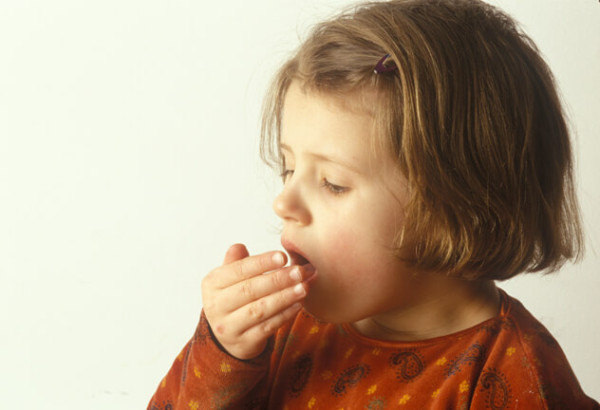

The body needs a cough to clear accumulated mucus and dust particles from the airways. This is a normal defensive reaction. But, there are situations when the cough becomes too intrusive, causes a lot of inconvenience and does not go away for a long time.
Periodic coughing, up to 15 times a day, is considered normal. Especially when they are traced in the morning. Prolonged coughing in children appears due to various factors and is subdivided into dry or wet cough. Because of this, the differences in the methods of treating childhood cough and the methods of its diagnosis.
Coughing is divided into the following types:
- Depending on the period of its occurrence, they distinguish between continuous (constant), irregular (happens from time to time).
- There is also a gradation according to the time of day in which attacks mainly occur - morning, evening or night.
- By strength - simple, unobtrusive or harsh paroxysmal, up to hemorrhages in the eyes and nausea.
- According to the duration, it can be sharp, not lasting about 2 weeks, significant protracted, lasting for 1 month and protracted - up to 5-6 months.
At such a time, you should carefully monitor the baby. Pay close attention to his behavior, energy, whether he wakes up appetite whether foreign spots have appeared on the skin or mucous membranes, whether there is a rise in temperature. Do not postpone your visit to the doctor. First you need to visit a pediatric therapist, then you should pay a visit to an allergist, phthisiatrician, pulmonologist, parasitologist.
Be sure to make a reaction to Mantoux, as well as hand over all the necessary tests - OA of blood, feces for egg leaf.
Mostly long cough provoked by similar factors:
- Repetition of the freshly cured illness.
- Too vigorous breathing activity - the child is out of breath after running.
- Fungus - Candida, occurs as a reaction of the body to an antibiotic.
- A lingering cough is often caused by the presence of worms in the body. They are likely to occur in the lungs. Only a special analysis will help to identify them.
- If antibiotics do not save in the fight against cough, this may be a signal of the presence of bronchitis, tonsillitis, pneumonia, pharyngitis.
- Often, a long cough occurs in children who suffer from inflammation in the tonsils and palate. Sometimes it is accompanied by a powerful runny nose, mucus gets into nasopharynx, coughing in this case becomes paroxysmal.
- Prolonged cough due to a viral disease in the lungs. The child manifests itself in the form of seizures, phlegm is difficult to pass, the baby cannot clear his throat in any way - it is accompanied by pain.
- During a protracted illness in the respiratory system, coughing becomes continuous, if an exacerbation occurs, it intensifies.
- With a chronic illness of the respiratory tract, coughing becomes continuous, with an exacerbation, attacks become more frequent, but after a while the frequency decreases. Remember that persistent coughing in a baby is very dangerous.
- A lingering and moist cough begins with the formation of pus in the lungs. It is especially aggravated in the morning, right after waking up.
- A wheezing cough is a direct indication of a foreign body entering the respiratory tract. For example, when a toddler choked on food.
- A wheezing cough is often caused by allergic reactions to pharmaceuticals, household chemicals, cigarettes, and waste.
Prolonged cough in a child without fever 

There are many factors for the appearance of a cough, diseases more infectious. In the presence of which mucus is formed in the respiratory tract, disrupting the normal activity of the lungs and bronchi. Prevention of this kind of infection is dangerous by the so-called residual effects, when a few weeks after the symptoms subside, the cough still remains. This is the essence of a prolonged cough, if you do not look at it deeply. The most detailed study of it makes it possible to look more extensively into the causes of prolonged cough.
Analyzes can reveal such hidden diseases as:
- asthma;
- pneumonia;
- sinusitis;
- fibrosis;
- gastrointestinal disease;
- reaction to medication;
- cancer;
- heart failure.
Prolonged dry cough 

A tearing dry, prolonged cough or infrequent coughing in children cannot but worry, since this is often considered a sign of tuberculosis. And despite this, almost everyone is convinced that this disease is necessarily accompanied by an increase temperature... In fact, this phenomenon is not observed. Therefore, if this continues for more than 2-3 weeks, it is necessary to consult a phthisiatrician.
Giardia, roundworms, pinworms and other parasites that inhabit the body sometimes stimulate a dry cough. But only if the parasites have spread throughout the body. Thus, it is important to undergo regular medical examinations and prophylaxis with the whole family.
The reason for the appearance of a prolonged dry cough in children in the absence of fever is considered to be the remnants of whooping cough. During this illness, the part of the cerebellum that is responsible for coughing is irritated. And the baby can suffer up to 3 months. If this kind of diagnosis has been established, the doctor is obliged to warn the parents and prescribe antitussive drugs.
But in practice, dry cough is most often caused by ordinary household dust and insufficient humidity in the room. The lungs are obliged to clear themselves and as a result, a cough is produced. During the flowering period of plants - the warm season, the cause of such a cough can be pollen.
Prolonged wet cough 

The reasons for the appearance of a raw cough, without changes in the standard body temperature, are no less than that of a dry one. In most cases, this is a symptom of an illness in the bronchi or an upper respiratory tract infection. Which can last for a long time. A wet cough in an allergic baby may be a reaction to the pathogen.
This situation is often accompanied by an inflammatory effect in the bronchopulmonary system, and therefore will require the use of bactericidal drugs.
In any case, regardless of the type of cough, parents should consult a specialist. Do not be negligent about children's health - this can significantly spoil the future of the baby.
How to treat a lingering cough 

The method of treating a lingering cough depends on its type. With a dry cough, drugs are prescribed that thin the phlegm - Delsim, Libeksin. When wet - those that take it out: Mukoltin, ACC and others.
In the case of the treatment of a child's cough, it is best to use decoctions and tinctures. Do not forget to pay attention to the proportions - it is so easy to harm a small body. Do not brew more than 12 herbs at the same time - the infusion will lose its medicinal properties.
The most effective use is considered herbs and products with anti-inflammatory effect. For example:
- Honey.
- Linden.
- Thyme.
- Chamomile.
- Calendula.
- Lemon.
- Raspberries.
- Mint.
- Eucalyptus.
- Coniferous trees.
- Rose hip.
- St. John's wort.
Along with health benefits, these foods can stimulate and strengthen immunity.
Folk cough recipes 

Inhalation is rightfully considered the most effective means of traditional medicine. Probably, as a child, mom forced everyone to breathe over hot potatoes. This method helps to effectively warm up the lungs. Instead of potato broth, you can use herbal decoctions, essential oils.
It is good if you have a special nebulizer. Regular inhalations with saline can even cure bronchitis. The thing is that the solution contains salts, which cope with phlegm.
List of the most effective traditional medicine recipes for coughing:
- Burnt sugar. Pour sand into a teaspoon and hold over the fire of a gas burner. When the grains melt into an even brown liquid, remove from heat and cool. Eat like candy. A spoon should not be held with bare hands; it is better to use an oven mitt.
- At night, you can rub your breasts with peppermint or eucalyptus essential oils. Pork and goose fats are also good for this.
- Fold finely chopped onions into a saucepan, cover it with sugar, add a couple of tablespoons of honey. Cover with water and simmer over low heat for 3 hours. Strain the resulting liquid and cool. Take 1 tbsp. 5-6 times a day. Store the mixture strictly in the refrigerator.
- It is good to drink a glass of warm milk with honey, butter and cinnamon before going to bed. This blend not only fights dry coughs, but is also delicious.
Remember that health is not a toy; it does not tolerate neglect and negligence. Especially when it comes to children's health.


Thank you for the article! With a dry cough, the phlegm was liquefied with Prospan syrup. And they also drank tea with honey (dissolved in warm water), the lime blossom was brewed and compotes from dried fruits. Coped with the cough without complications.