Masala tea

During the period of colonization of India, tea with milk became widespread among the local population. Over time, the Indians improved their favorite tonic drink and masala tea appeared.
What is masala chai
Masala tea differs from regular tea with milk by adding some additives. They make it healthier than regular tea and provide an unusual, pleasant taste. The ingredients of masala tea include: black tea leaves, milk, ginger root, cardamom, cinnamon and sweetener.

The spices added to masala tea may vary. It all depends on taste preferences. Traditional spices cinnamon and ginger give a bright taste, but if a person prefers a softer aftertaste, then use, for example, star anise.
You can take any type of black tea, but it is still better to give preference to large-leaf varieties. They make the drink more aromatic and give it a brighter taste. But tea with fruit additives or with a fruit aroma does not need to be added to masala tea. Adding milk will distort the taste of the fruit.
The benefits and harms of masala tea
In addition to its unusual pleasant taste, this warming drink has many beneficial properties. Masala tea can give you energy, especially if you drink it in the morning. At the same time, metabolism is activated and energy circulation starts. In terms of its properties, masala tea can compete with morning coffee, which is harmful in large quantities. 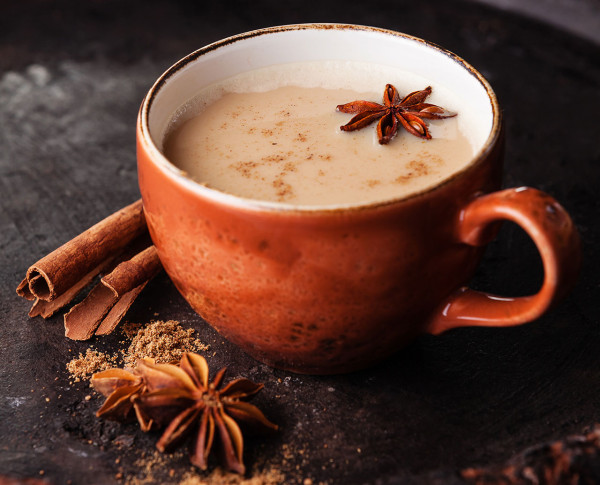 Besides these pleasant qualities, drink has other useful properties:
- Thanks to spices with a warming effect, masala tea can play a role in the prevention of colds.
- Able to resist weakly developing infections and strengthens immune defense.
- Prevents the development of atherosclerosis and helps in blood purification.
- If you add cloves to the drink, it can be used to heal the liver.
- The cinnamon in the drink gives it a weak diuretic effect.
- Helps cope with chronic fatigue.
- Helps strengthen and improve the elasticity of the walls of blood vessels.
- It is useful to use for vegetative-vascular dystonia to stabilize blood pressure and strengthen the heart.
- Promotes the digestion process, metabolic processes, eliminates the feeling of heaviness in the stomach.
- It has a positive effect on the functioning of the nervous system, improving memory, performance and mental activity.
- For a long time, this drink was used to prevent tuberculosis.
It is generally accepted that warming masala tea can be drunk by all people. But you should still avoid it if you have a particular sensitivity to the components of the drink, chemical burns to the oral cavity, or lactose intolerance.
Masala tea recipe
First, let's talk a little about the components of the masala drink. It is better to take large-leaf Assam or Ceylon tea, also with a blend of large leaves. Depending on how strong the drink you want to make, you need to either boil the tea over low heat or pour black tea leaves into boiling water and leave to steep.

You can add any milk, with different percentages of fat content, it all depends on your taste preferences. The proportions may vary; milk is often added last to the finished drink. In some cases, water and milk are mixed first, and then the remaining ingredients are added. With the help of milk, all facets of the taste and aroma of spicy additives are revealed. You can not just add spices to the heated milk-water mixture, but cook them a little at low heat.
It is preferable not to add already prepared spices. The taste and aroma are much brighter if the aromatic additives are ground immediately before brewing the tea.
In the classic version of preparing butter tea, you first need to crush 2 large tablespoons of grated oil in a mortar ginger root, 5 cardamom seeds, 5 g black pepper, half a cinnamon stick. Then this spicy mixture is mixed with tea leaves (50 g) and poured into a saucepan for brewing. Add half a glass of cold water there and put on low heat. When the mixture boils, pour heated milk into it and add sugar to taste. Mix everything and pour into cups.