Ovulation: what is it and how to calculate

First of all, women who are concerned about the question of what ovulation is and how it happens planning a pregnancy. However, this information will not be superfluous for any representative of the fair sex, because for us girls, it is very important to know all aspects of our body.
Contents
What is ovulation in women
Nature has endowed a woman with a unique ability to bear children. From the moment of birth, a huge number of eggs “live” in her ovaries. However, many of them die even before they are ready for sexual activity, without waiting in the wings. Others begin to ripen one at a time each month and leave the ovary in anticipation of fertilization - this is called ovulation. As a rule, it occurs 14 days before the start of “menstruation” and lasts only 24 hours.

This process can be compared to a “mini-explosion” - a follicle bursts in one of the ovaries and an egg ready for fertilization emerges. This phenomenon can happen at any time of the ovulatory day.
It is very rare, but it happens that ovulation occurs twice in one month, with an interval of about two days. Therefore, girls who want to get pregnant need to take advantage of this “bonus”. Those who use a contraceptive method should take this fact into account when calculating the onset of “day X”.
Symptoms of ovulation
You can recognize the time of onset of the ovulatory period by certain signs:
- short-term pain appears in the lower abdomen, usually from the side of the ovary from which the egg is released;
- the amount of vaginal discharge increases, it becomes watery and has the color of egg white;
- engorgement of the mammary glands occurs;
- basal body temperature rises;
- sexual attraction to the opposite sex increases.
It is worth noting that all of the above symptoms are individual for each woman. Some of us may experience all the signs at once, while others may experience none.
When does ovulation occur?

Typically, ovulation occurs every 21-35 days. It starts around the same time if a woman has a regular cycle.
However, it happens that some disruptions occur in the body, then the egg leaves the ovary a couple of days earlier or later, and these phenomena are called early and late ovulation. This happens for the following reasons:
- irregular menstrual cycle;
- hormonal disorders;
- constant stress;
- various gynecological diseases;
- postpartum recovery period;
- previous abortion;
- reaching the age of 40, when the body begins to prepare for menopause.
The ovulation process lasts only one day. We can say that it ends as soon as the egg is released. If fertilization does not occur during this time, then after two weeks the woman will begin her “critical days.”
How to calculate ovulation
Each girl can independently calculate the date of her ovulation; there is nothing complicated about it. The only and main condition is that the menstrual cycle must be regular.
Calendar method
Before you start focusing on the results of this method, you need to regularly mark the start and end dates of your menstruation for six months, or even better, a year. Then the results will be more accurate.
For example, your cycle length is 28 days. In order to find out the expected date of ovulation, you need to add 28 days to the first day of your last “menstruation”, and then count back 14 days from the received date. If the cycle lasts 30 days, then add this number accordingly.
Today there are a large number of Internet services and applications that help to automatically carry out these calculations, so you can safely use them. They indicate the ovulatory period and ovulation itself, as well as safe days.
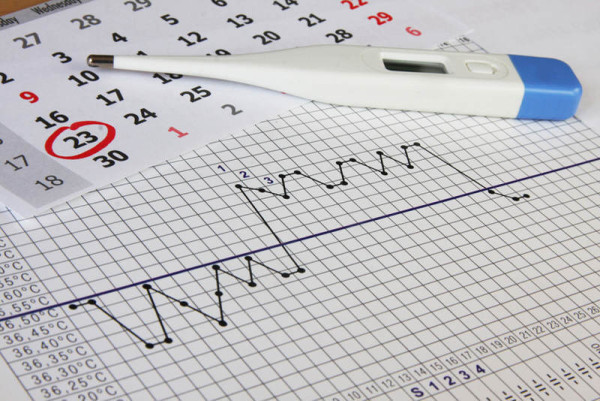
Basal temperature chart
Using this method, you can quite accurately determine the presence of ovulation, since at this time the basal temperature increases by 0.25-0.5 degrees. Usually the average readings are 36.3-36.5 degrees, and at the time of its onset they rise to 37.1-37.3 and remain at this level until menstruation or pregnancy occurs.
It is very important to carry out all measurements correctly:
- in the morning at the same time, while sleep should be long - at least 6 hours;
- use the same mercury thermometer;
- Take temperature measurements for at least 5 minutes;
- It is forbidden to make sudden movements or get out of bed until the measurements are completed.
To obtain the most accurate results, it is necessary to schedule daily for 3-4 months. You also need to take into account many factors: illness, taking medications and alcohol, sexual intercourse that occurred the day before. All of them must be noted in your notes.
This schedule, like the calendar, can be maintained and filled out online.
Of course, a certain error in the calculations cannot be ruled out. To minimize it, you should use more accurate methods of identifying your ovulatory period. For example, folliculometry, but we’ll talk about that a little later.
Ovulation test

Another way to calculate the day of ovulation is special tests. They are similar to those performed to determine pregnancy.
Their operating principle is as follows: 24-36 hours before the follicle ruptures, luteinizing hormone appears in the urine, and test strips help detect its presence.
In the pharmacy you can find diagnostic systems from different manufacturers, however, their sensitivity is the same, so choose any option that suits you.

Before using them, it is very important to consider some factors and follow certain rules:
- the reliability of the test decreases while taking any hormonal agents, both internal and external;
- the result is distorted when drinking a large amount of liquid, as the concentration of the desired hormone in the urine decreases;
- urine collection is performed only after 4 hours of abstaining from going to the toilet;
- To obtain accurate results, it is recommended to do them every 12 hours and strictly follow the instructions. Be sure to use all 5 test strips in the package.
You need to start conducting such tests approximately 11-13 days before your next menstruation, but provided that the woman’s cycle is regular and lasts 28 days. If this figure is higher, then do the diagnosis 17 days in advance.
In a situation where the cycle is not regular, this method will not work because it will be difficult to calculate the required period for testing.
The only correct way to do this is to calculate ovulation using ultrasound.
Discharge during ovulation
You can also recognize the onset of the ovulatory period and ovulation itself by characteristic vaginal discharge.
In the first stage of the menstrual cycle, thick mucus closes the entrance to the cervix; it can be compared to a kind of “plug” that performs a protective function. This is called the "dry" period. When ovulation begins, it becomes liquid and viscous and comes out in the form of copious discharge - the “fertile” period. Then the mucus thickens again.
In appearance, this discharge resembles egg white, but it happens that a woman notices slight bloody, even brown, “traces” on her underwear. And this is an absolutely natural phenomenon that occurs due to the rupture of the follicle when a mature egg leaves it. It can last about 48 hours.
However, you should not completely rely on this sign alone. Each organism is individual and the same processes described in books on medicine occur in completely different ways in practice.
Pain during ovulation

Some women ovulate painful and the sources for this may be the following:
- contraction of the fallopian tubes intensifies, because they try to catch a mature egg in time;
- the very process of “explosion” of the follicle sometimes provokes spasms;
- the egg grows during the process of maturation and stretches the follicle, due to this some discomfort occurs in the ovary;
- in the presence of various gynecological diseases, the pain syndrome intensifies, for example, if there are pelvic adhesions.
If significant pain symptoms occur during the middle of your cycle, it is very important to consult a doctor. He will help eliminate other causes that may provoke them, and recommend the necessary treatment, for example, taking medications - no-spa, spasmalgon.
Taking a warm bath will help relieve discomfort. You can add herbs to the water, or essential oils.
Also during this period, it is better to exclude fatty and spicy foods, legumes, white cabbage, strong coffee and tea from your diet, as these products increase intestinal motility, which in turn aggravates pain.
Ovulation and conception

As you know, without ovulation, conceiving a child is simply impossible. But you should not confuse these concepts with each other, because these are two completely different processes.
Let's consider how everything happens inside the female body. At the moment of ovulation, the egg leaves the follicle and enters the fallopian tube, through which it moves until it reaches the body of the uterus. During this journey, which lasts only 24 hours, she must meet a sperm for conception to occur. If fertilization has occurred, the egg, once in the uterus, implants into its wall and pregnancy occurs. If their meeting did not occur or something did not work out, then menstruation begins, through which the egg is removed from the body.
When planning a pregnancy, it is worth considering that the life cycle of sperm is 5 days. Therefore, conception can occur even if sexual intercourse took place several days before ovulation.
The most favorable period for fertilization of an egg is considered to be the day of ovulation itself, as well as 5 days before it and 3-4 days after, since there is an error in the exact determination of this moment and we must not forget about the probability of two ovulations in one cycle.
However, modern medicine does not stand still, and therefore an accurate method has emerged for determining the days of the cycle corresponding to ovulation - this is folliculometry or ultrasound diagnostics of the ovaries. With its help, you can determine the best time to conceive.
Lack of ovulation
During the year, the female body “rests” several times, which means that the egg does not mature, but menstruation still takes place. This process is considered absolutely normal and natural and is called anovulation.
But it happens that some kind of malfunction occurs in the body and ovulation does not occur completely, then we can talk about a menstrual cycle disorder. The reasons here may be:
- diseases associated with hormonal system disorders;
- taking certain medications;
- the first months after stopping oral contraceptives;
- constant stress, excessive physical activity;
- low body weight in women (less than 42 kg with average height).
All these causes of “incorrect” ovulation can be easily eliminated or corrected with appropriate treatment methods. Therefore, it is very important to monitor your health and seek help from a specialist in time.
Ovulation stimulation

When a woman's numerous attempts to become pregnant remain unsuccessful, there is a need to stimulate ovulation.
You can resort to these procedures only if the couple is unable to conceive a child naturally for a period exceeding 1 year.
Before stimulation, both partners must undergo all necessary medical examinations so as not to unreasonably endanger the woman’s health.
There are various methods of stimulation: medications, vitamin therapy, folk remedies.
Hormonal drugs and injections are prescribed and used only for appropriate medical indications and under the strict supervision of a doctor and ultrasound diagnostics.
The main “female” vitamins that help the egg mature are vitamin E, iodine and folic acid.
“Natural” stimulation occurs through the use of decoctions and infusions of various herbs: sage, boron uterus and red brush leaves. And a decoction of rose petals contains a large amount of vitamin E, which has a beneficial effect on the ability to conceive a child. This method is considered the safest, provided, of course, that all these drinks are prepared in the correct proportions.