Newborn sleep

After the birth of a baby, the life of a family changes dramatically. Now, in addition to the role of a wife, a woman is obliged to perform other responsibilities - to care for the child, feed him and develop him. At first, a young mother is worried about many things. In addition, she needs to somehow combine motherhood and daily chores, so the question of the baby’s sleep is always acute. The daily routine of all other household members depends on him. What to do to ensure a comfortable sleep for a newborn? And what are the causes of sleep disorders?
Contents
How long do newborns sleep?
Duration of daily sleep newborn is rarely an indicator of its normal growth and development, because it is necessary to rely on the individual characteristics of the organism. We can only talk about statistical data that speaks of average standards, which is 16-20 hours a day. At the same time, if the baby’s behavior does not bother you, he has a good appetite, regular bowel movements and there is no increase in body temperature, then let him sleep as much as he wants.
The average number of hours a newborn sleeps at night is 8-9. But this indicator also depends on many factors:
- When sleeping together with the mother, the child often sleeps more soundly and longer, because the baby can attach to the breast at any time.
- When sleeping separately, the number of hours is reduced to 6-7; in this case, it is better to set a feeding schedule.
- Swaddling also has a positive effect on the quality of sleep.
- The emotional atmosphere in the family is not the last factor. A mother should not be so exhausted that she is unable to pay attention to the child, otherwise he will feel insecure and lonely.


What to do if your newborn doesn't sleep well
It’s worth noting right away - the opinion that child in the first month of life he should sleep for days, waking up only when he gets hungry, is a mistake. Of course, children are all different, but most of them open their eyes and grunt approximately every 2 hours, and while awake, children are happy to get acquainted with their surroundings, although their perception is still very different from adults.
For the normal development of a child, communication with parents is necessary even at this age, and the more, the better. However, there are certain limits by which you can determine whether the newborn is sleeping enough or whether it is worth worrying about. If your baby sleeps less than 14 hours a day and is awake for about 5 hours at a time, is restless, appears agitated, cries for no apparent reason, and wakes up every 10 minutes after falling asleep, this may be the cause of some problems. The most common of them:
- First of all, eliminate the main factors - hunger and wet diapers. There are patient kids who won’t start screaming because of this, but most children make themselves known when they feel discomfort. If the baby does not calm down after feeding, he may not have enough mother's milk and is not getting enough.
- In newborns, the body's thermoregulation processes have not yet been fully adjusted, so they react to a decrease or increase in the temperature in the room. Try to keep it at 20-24 degrees.
- The reasons may be objective - street noise, screams or knocking in the next room.
- When sleeping in the child's room, create an appropriate atmosphere - there should be no bright sources of light, close the curtains, leaving only a night light.
- One of the most popular factors influencing a newborn’s sleep is the accumulation of gases in the intestines, the well-known colic. There are a great many ways to eliminate the disease, but all of them help only for a short time.
- Strange as it may seem, babies also experience loneliness, because birth is a severe shock for them. Do not skimp on affection and emotions, often take the baby in your arms and hold him close. For wearing, you can choose a special device - a sling.


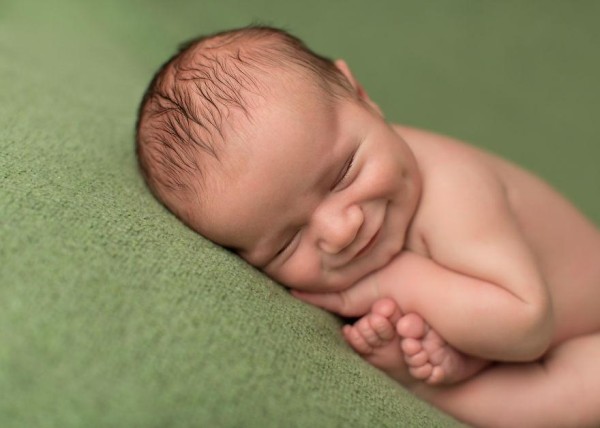
Newborn sleeps a lot
Good nutrition and sleep are two important components of the proper development of a baby, both physical and psychological. Many parents are happy if the newborn sleeps for several hours in a row without waking up to feed. This is the norm if the baby looks calm and well-fed, receiving mother’s milk while sleeping, but if not, after 4-5 hours, pediatricians recommend waking up and feeding the baby (you need to wake up only in the REM sleep phase).
But this can also be an alarming signal that threatens the newborn with dehydration and problems with lactation.
What affects a baby’s excessive sleep?
- The cause is often complications during childbirth, because for baby it's a huge stress. In addition, during prolonged labor, doctors use medications that enter the baby’s blood.
- It is very important to put your baby to the breast correctly. Too much milk pressure can frighten the baby; he may also have difficulty latching on to the nipple, in which case the baby will get tired and fall asleep hungry.
- If the baby suffers from colic and does not sleep well, then with the slightest relief he will, of course, relax and sleep for several hours in a row.
- After vaccination, newborns are often given medications for allergies, fever and pain. Long sleep after vaccination is normal.
- Various diseases take a lot of strength from the baby, so during the recovery period they need restoration.
- A baby's restless sleep can result from serious illnesses. Consult a doctor immediately if your child’s temperature rises during sleep, his breathing is heavy and intermittent, his mucous membranes become bluish in color, the baby sleeps without moving and does not respond to attempts to wake him up.

What to do if a newborn does not sleep and cries
When you hear the plaintive cry of your baby, first of all, rule out the most common reasons for crying; they are usually physiological - hunger or the need to change a diaper.
There are many babies who cry most of the day and even at night, and their screaming is replaced by deep and prolonged sleep. This may not indicate the presence of an illness; this is how hyperexcitable children behave.
If the baby's behavior causes concern and alarm, it would be a good idea to check him for the presence of intestinal infections and parasites.

The psyche of young children is very “mobile”. Any event can cause stress and, as a result, loud, inconsolable crying. Do not tire the baby with long conversations with relatives. Fatigue and emotional overexcitation do not allow him to sleep peacefully.
In the first 3-4 months of a child’s life, he often suffers from colic; due to sharp pain in the tummy, he can cry for several hours in a row, often at the same time, for example, in the evening. The baby tightens its legs or, conversely, stretches out like a string. At the same time, the baby eats well and gains weight according to norms.
To ease the condition of a newborn, lay him on his tummy, and each time after feeding, carry him in a column, giving him the opportunity to burp air. But it is better to coordinate the use of medications with your pediatrician. 
How to put a newborn to sleep
A child's sleep during the first year of life occupies a significant part of his daily routine, so any pediatrician will tell you that there are some rules when putting the baby to bed.
- The room in which one sleeps baby, must be cleanly washed - no dust or dirt. If possible, ventilate the room in advance and draw the curtains.
- The air temperature should not exceed 20 degrees, and humidity - 70%.
- Up to a year, it is recommended to put a child to sleep on a hard surface, for example, on a mattress with natural filling; do not cover children with a warm blanket and do not use a pillow; it can be replaced by a diaper folded several times.
- A good alternative to a mattress can be considered a special cocoon for sleeping or a sleeping bag; the baby will be comfortable in it, like in a mother’s belly.
- If parents practice co-sleeping with their child, for hygiene reasons they should have a separate sheet (diaper) and a light blanket.

If we talk about laying methods, then parents can and should use the stroking technique. To do this, find the point between the baby's eyebrows and stroke with light clockwise movements.
If laying down takes place in a crib, then a pendulum mechanism and a musical mobile come to the rescue. 
How to sleep properly for a newborn
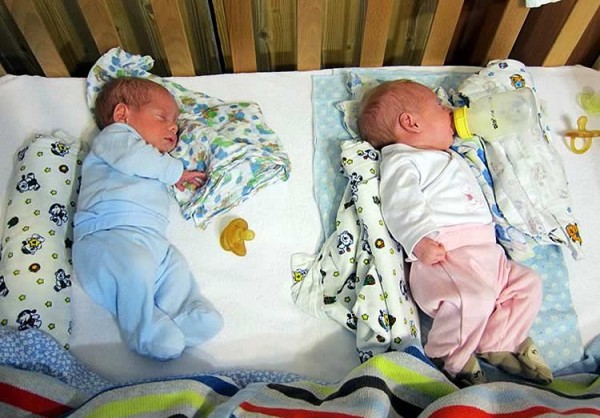
Possible sleeping positions newborn:
- The safest position is considered to be the “on the back” position; the baby’s head must be placed on its side so that in case of regurgitation, he does not choke. Some parents constantly put the child's head on one side, this is wrong, the sides need to be alternated so that torticollis does not develop. Sometimes this position is unacceptable, for example, if a baby has increased muscle tone and in a dream he wakes himself up with his hands, swaddling in this case is not always a panacea.
- In addition to tone, there are other restrictions in which a more suitable position during sleep would be the “stomach” position. These include dysplasia (improper development of the hip joint) or a period of active colic. On the tummy, gases leave the intestines naturally and the baby feels better. But do not forget about safety measures - the child should sleep on a hard surface and under adult supervision to eliminate the risk of suffocation.
- The position “on the side” is also safe, but make sure that the child does not roll over onto his stomach; to do this, place a pillow or a rolled-up diaper on the back side. Usually, when laying on its side, the newborn presses its legs to the chest, which promotes better removal of gases, but the hands are directly in front of the face; in this case, wear special anti-scratch pads. This type of sleep is very suitable for children who often spit up, but is contraindicated for dysplasia.

Advice for young parents
Experts still cannot decide - what is better, separate or joint sleeping between a newborn and his parents? Some argue that childbirth is a strong shock for a baby, and the subsequent separation of him from his mother can aggravate the situation. In addition, this option will allow a woman to breastfeed her baby without getting up several times a night.
Others assure that a baby does not belong in the mother’s bed, only the father can sleep there, and purchasing a crib or cradle is a vital necessity.
There is even more controversy regarding baby rocking. Our mothers and grandmothers, as a rule, agree that it is absolutely forbidden to do this, as the child gets used to the hands and later has problems falling asleep.
Many pediatricians and neurologists disagree with this and claim that while rocking, the baby’s vestibular apparatus is trained. In addition, babies often suffer from colic, and rocking distracts them from pain and allows them to relax, and allows the mother to take a break from emotional stress and crying.
As a form of hardening, doctors recommend regular sleep in the fresh air, so the child falls asleep faster and sleeps more soundly. The place and time should be chosen depending on weather conditions. In case of strong wind, it is possible to lay it on the balcony, and during snow and rain - under the roof.