Blue cheese: benefits and harms

Not so long ago, he entered the life of a modern man cheese with mold. For a short time, he received ardent admirers and equally ardent opponents. Such a product has a specific aroma, appearance and taste. But it should be remembered that not all molds on cheese and other products are useful, therefore, some aspects must be considered when choosing a product.
What is the name of blue cheese 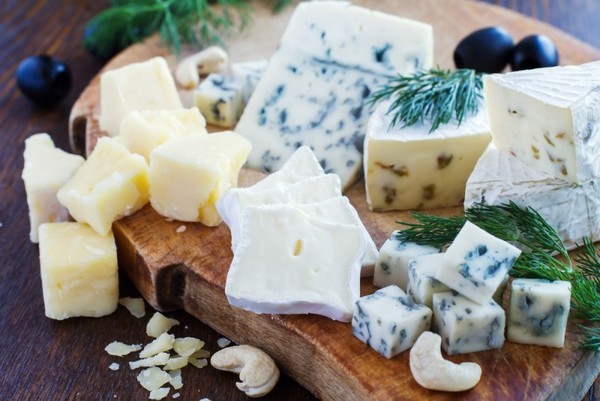

There are over 500 varieties of blue cheese in France. Moreover, it should be clarified that this is not a simple mold, which covers products with improper storage or the expiration date, this is a special type of food mold that is added in the manufacture of cheeses. It is completely safe for the human body.
The main types of cheese are characterized by a shade of mold: red, blue and white. Red cheeses are a little spicy and savory, the Münster and Limburg varieties are very common. White - creamy, delicate, with a light mushroom taste, this is a variety of Camembert and Brie. Blue are the hottest and most piquant, the most famous Roquefort variety.
Popular varieties of blue cheeses:
- Bree;
- Roquefort;
- Munster;
- Dor Blue;
- Epuass;
- Livaro;
- Camembert;
- Limburgsky;
- Gorgonzola;
- Stilton;
- Cambozolo;
- Furme d'Amber.
All these types are made from natural cow's milk except for Roquefort. It is made of sheep milk... Gorgonzola, Stilton, Cambozolo and Fourme d'Amber are blue cheeses, while Epuiss and Livaro are red.
The benefits of blue cheese 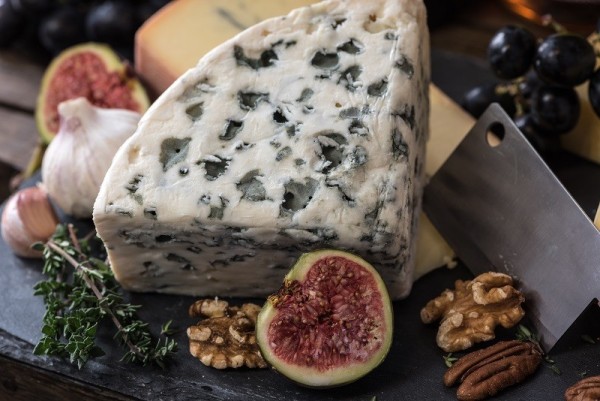

Used in small quantities, moldy cheese has been proven to help relieve insomnia. As in any cheese, there is a lot of calcium in a moldy product, which the human body needs for strong bones, nails and teeth. And due to food mold, calcium is better and faster absorbed by the body. Also, blue cheese has a lot of protein, and cheese is in the first place among fish and meat, endowing the body with protein, which in turn is necessary for muscle tissue.
The delicacy contains a lot of essential vitamins, amino acids and useful microelements. All of them saturate the body, improving its work, strengthening the muscles.
Due to mold and some substances, the production of melanin in the skin is improved, which significantly reduces the negative effect of ultraviolet rays and the appearance of sunburn.
Food mold, penetrating into the intestines, improves its functioning, while giving a favorable environment for beneficial bacteria. This prevents the fermentation of undigested foods and dysbiosis.
It has been proven that people who have added a cheese delicacy to their diet are less susceptible to strokes, heart attacks, depression, disturbed sleep, fatigue, and fatigue. In addition, the consumption of cheese helps the rapid healing of various wounds.
The harm of blue cheese 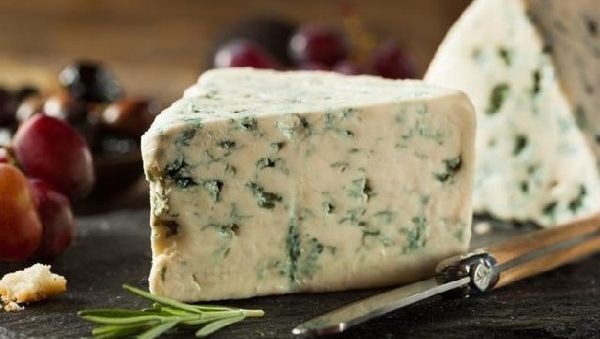

Of course, like any other product, the moldy delicacy should not be overused. Even the healthiest person, if the dose is exceeded, can begin to suffer from the intestines. The optimal amount per day is 50 g of the product.
For people suffering from chronic problems of the gastrointestinal tract, it is better to refuse the sample of the delicacy altogether. You can get intestinal upset and dysbiosis.
In case of fungal diseases and allergies to penicillin, the delicacy can worsen the whole situation, so the product should be excluded from the diet, or consumed with great care.
Allergic reactions to moldy cheeses are also possible. Such a delicacy with blue and white mold is harmful for women during pregnancy and lactation. Pregnant women may experience the following problems: fever, fever, and vomiting. Because of these symptoms, premature birth, abnormalities in the developing fetus, and miscarriage may appear.