How to make blue cheese

On the shelves of the store in the cheese section you can find various varieties of cheeses with red, white or bluish mold. There seems to be no way to do it yourself. But this is not so, this type of cheese can be prepared at home, observing all the rules, conditions and sterility.
Contents
Ingredients for blue cheese 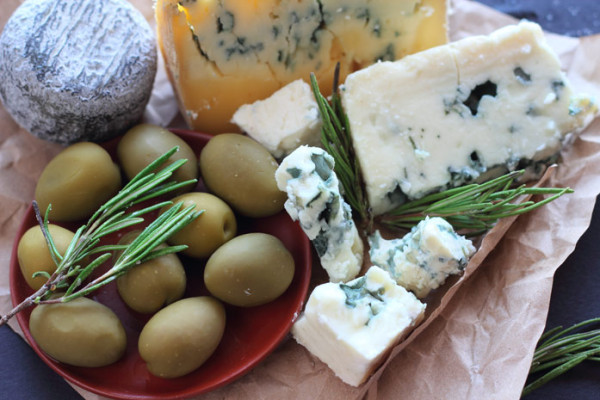

Most often, blue cheeses are made from natural cow, goat or sheep milk. To grow mold, a special bacterium is grown. For white mold, the bacterium Penicillium Camemberti is used. It covers only the surface of the cheese, without spreading inside.
A blue or greenish mold - the bacterium Penicillium roqueforti - is used for Roquefort and Dor Blue varieties. It grows not only on the surface, but also inside the cheeses, creating a marble pattern and a spicy, islandy, mushroom flavor.
Cheeses with red mold are not for everyone, as they have a rather specific aroma of “unwashed feet”. They use the bacterium Brevibacterium linens, which only covers the crust of the cheese.
How to prepare blue cheese 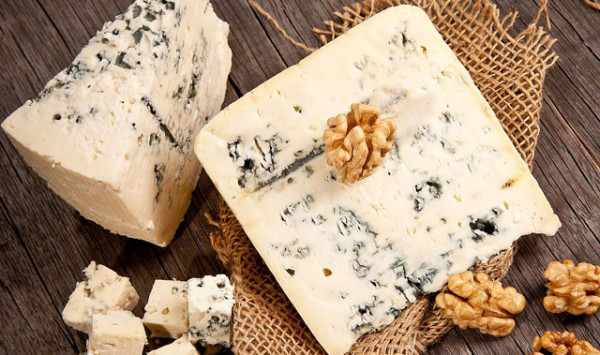

Cheeses with noble mold are soft and hard. White cheeses are made by curdling full-fat milk, then it is salted and sent to the cellar with moldy fungi. These bacteria cover the basement walls.
Blue cheeses are prepared also curdling, after which the mixture is poured into the mold. After a long time, the whey drains from the mass. When the product dries, it is rubbed with salt and stuffed with a special type of fungus. Then the mold is left to mature. 
When red cheese is ripening, it is washed with brine so that it does not become covered with ordinary mold. Then the product is subjected to special treatment with fungi, after which a red, blurry crust appears.
Homemade blue cheese 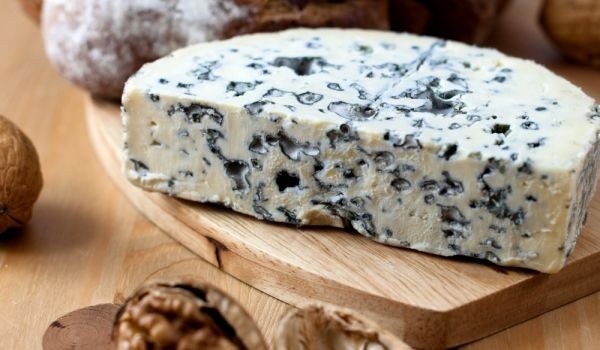

Homemade Dor Blue
What is needed:
- four liters of homemade milk, or store-bought, but with a short shelf life;
- salt;
- a piece of Dor-blue cheese;
- 1.5 glasses of sour milk or sour cream;
- 6 tablets Abomin or Acidin-Pepsin.
How to cook:
- Using a sharp knife, scrape off a small amount of mold from a piece of purchased product, preferably without cheese.
- Mix it and half a glass of milk, leaving for 60 minutes.
- Mix with the remaining milk, heat to 32 degrees and add sour product or sour cream at room temperature. Mix and set aside for 5-7 minutes.
- Grind the pills into powder and stir them in 50 ml of water.
- Pour the mixture into milk, stir and put in a warm place, covering with a lid and a towel for 1.5-2 hours until a jelly-like clot appears. When you press it, a yellowish serum should appear.
- Cut the jelly and gently stir with a wooden spoon, leave for 25 minutes. During this time, flakes will settle to the bottom of the container.
- Take a plastic cup and poke holes in the bottom and sides with an awl, the more the better.
- Place the glass in a deep plate and use a slotted spoon to catch and place the cheese flakes into it. Without pressing or covering, leave for half a day.
- After the allotted time, carefully remove the cheese, turn it over and leave again for half a day. This should be done 4-5 times, draining the draining whey from the plate.
- After the last time, coat the resulting product with plain salt and let it dry for about 10-12 hours.
- Scrape off more mold from store-bought cheese and mix it with a quarter glass of milk, leaving for 60 minutes.
- Pierce the cheese with a sterilized needle on all sides. Pour mold diluted in milk into these holes with a syringe.
- Take a plastic container. It should be larger in size than a plastic cup.
- Pour a spoonful of boiled water into it. Rinse the glass well and trim the edges.
- Place the cheese in a glass, turn it over and insert the glass into the container. You can cover the top with a saucer so that there is air.
- Place the container in a dark place at medium temperature until blue or greenish-blue mold appears. Mold growth period is 7-14 days. A prerequisite for all manipulations is thoroughly sterilized objects: knitting needles, spoons, cups. Try to turn the cheese every couple of days with gloved hands. After 10-14 days, you need to wrap the product in parchment and leave it in the refrigerator for 7 days.
Soft cheese with white mold
What is needed:
- 6 liters of natural milk;
- a small piece of Brie cheese;
- 1.5-2 tablespoons of salt;
- half a spoon of citric acid;
- 0.2 g rennet.
How to do:
- Take two glasses, fill each half with water. Mix citric acid in one and enzyme in the other.
- Heat the milk to 35 degrees, pour in the lemon mixture, and then the enzyme mixture. Mix thoroughly with a whisk. Leave for an hour until a clot forms.
- Cut into small pieces and leave for a quarter of an hour.
- Place the cup with the cheese product in hot water and, stirring, bring to 42 degrees. When stirred, flakes will form.
- Drain the whey liquid, add salt to the cheese mass and transfer it to the mold for 2-3 hours. During this time, the remaining whey will drain.
- Wrap the cheese in a cloth and put it in the refrigerator, turning it a couple of times a day.
- Collect mold from a piece of store-bought cheese and rub it into the finished cheese.
- Place the product in a container, cover with a lid and refrigerate for a couple of weeks.
- Wrap the cheese in parchment, put it back in the container and put it away for another couple of weeks.